
Skip to content

Materials

Walk-In Cooler Panels.
What You Choose Matters.

Your choice of panels, and who installs them, is the difference between a box you replace in five years and one that lasts thirty.

What we build with

Walk-In Cooler Panels.
We Spec the Right One.

For nearly every cooler and freezer we build, the insulated metal panels (IMP) — two steel skins with rigid foam poured between them — come from one of six manufacturers: FALK, Kingspan, Metl-Span, PermaTherm, Brucha and All Weather Insulated Panels. The foam is polyurethane (PUR) or polyisocyanurate (PIR). We spec the one that fits your room, then we build it.
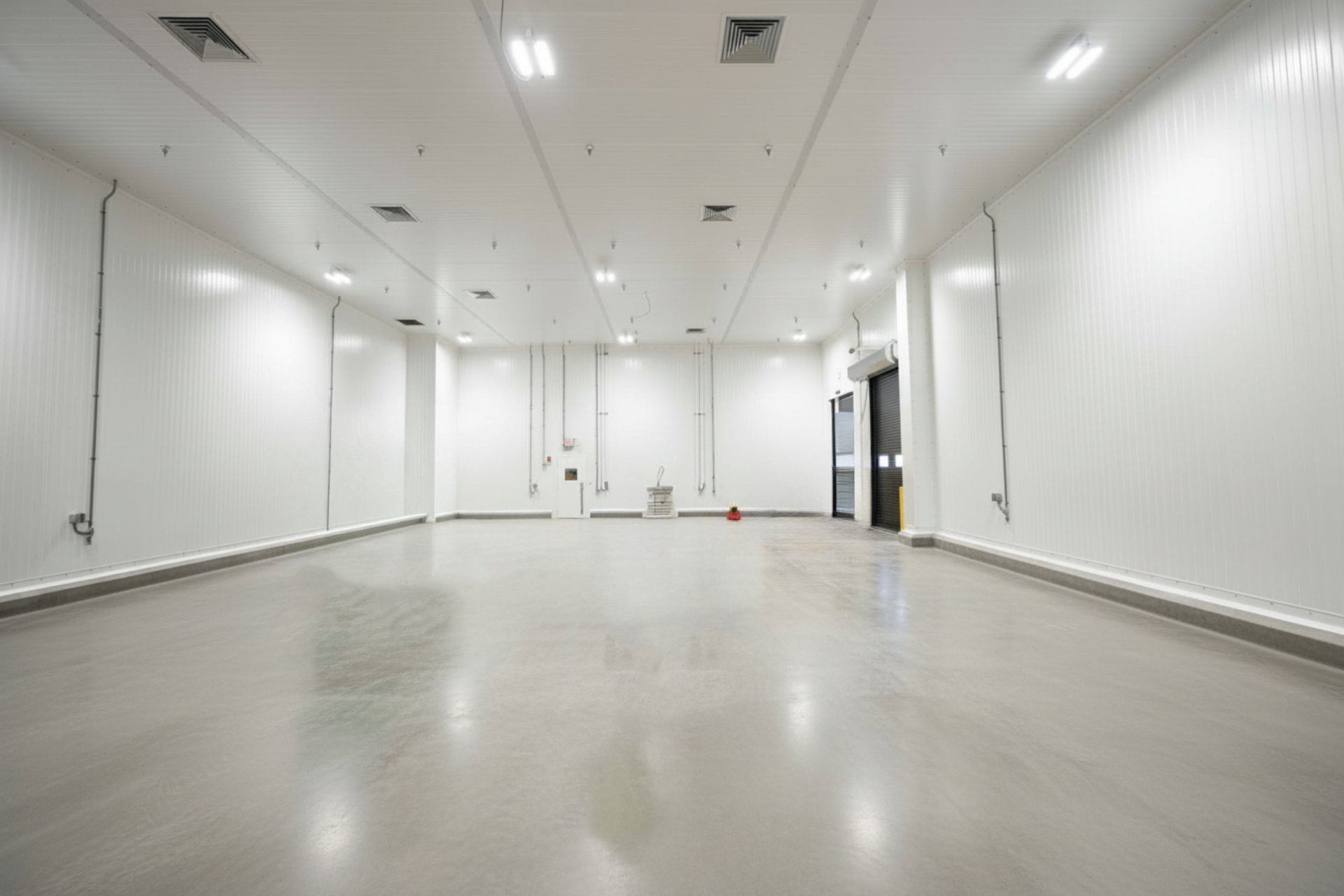
Coolers, 4-inch panel. Freezers, 5-inch or thicker.
Tongue-and-groove joints, sealed the whole length. No hardware driven through the foam.
Built to suit, on site, around columns, decking and whatever else you have coming through your current walls.
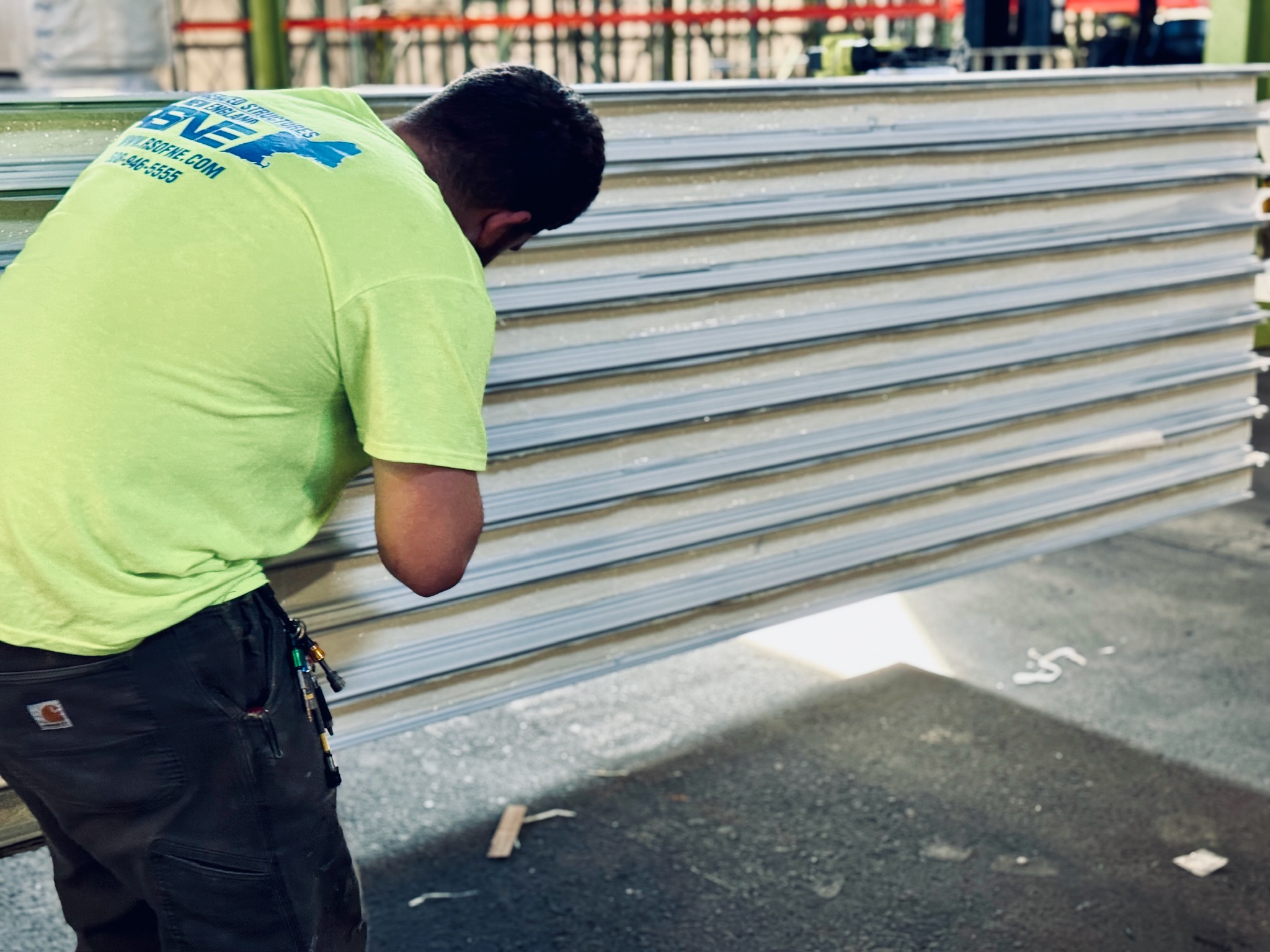
An RSNE crew member working on a stack of insulated metal panels in the shop, the foam core and metal skins visible on the panel edges

IMP versus the EPS panel

Thicker Wall.
Smaller Room.

Expanded polystyrene (EPS) is the cheap foam — white, beaded, the stuff a picnic cooler is made of. Inch for inch it insulates far less than PIR/PUR, resulting in thicker walls. Thicker walls means less room for your product.
With EPS, a cooler wall goes from 4" to 7". A freezer can have walls 7" or more.
In a 10' x 12' walk-in, that’s about a tenth of your volume. Every cubic foot matters.
Inch for inch, PIR insulates about 70% better than EPS. R-value measures how well a material resists the flow of heat. Less heat leaking into your box means lower electric bills.
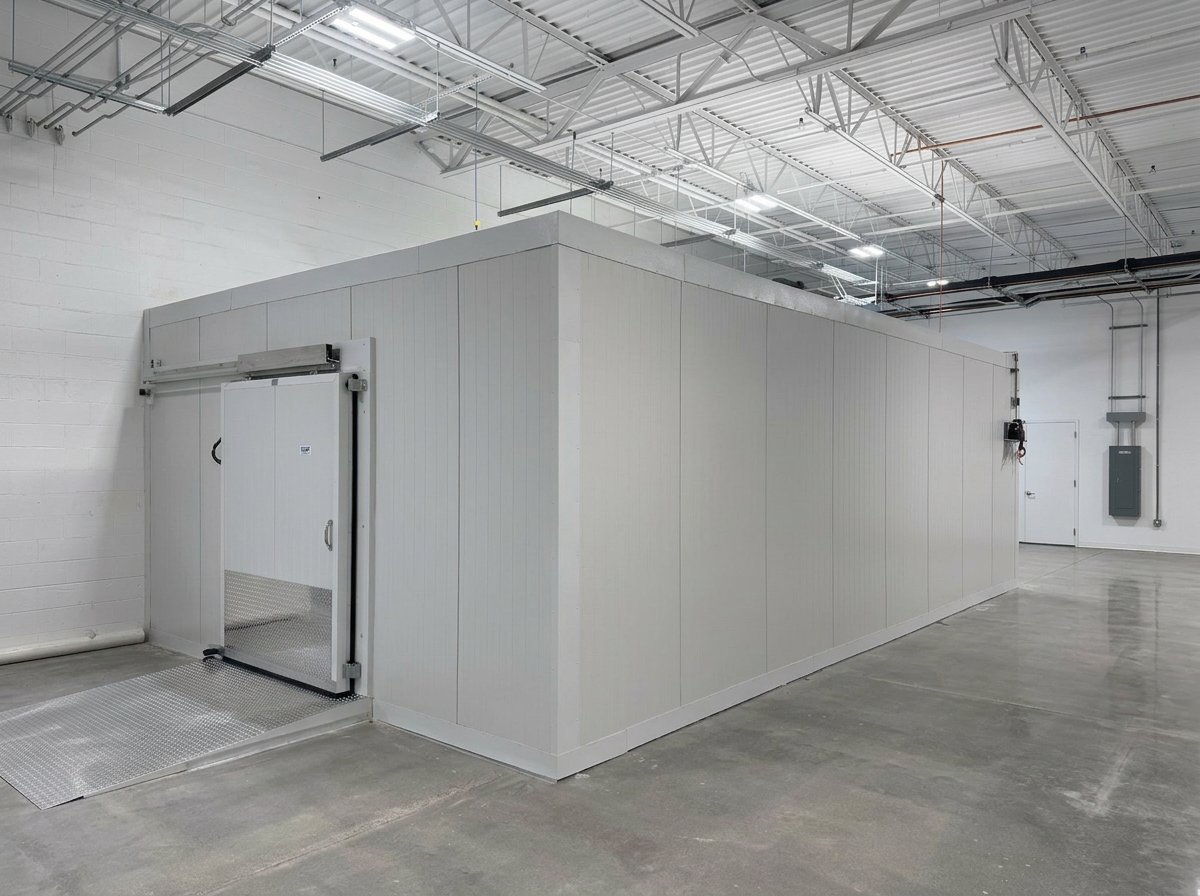
Walk in cooler panels forming the finished wall and ceiling of a room RSNE built

IMP versus the EPS panel

One Is Glued.
One Is Poured.

An EPS panel is foam board sawn off a block and glued to steel. Ours are poured in place and set as one. The glue line is where EPS panels tend to fail over time. Most EPS manufacturers’ delamination warranty ends if the panel gets washed down — which is what a food production room does nightly.
Poured foam grips the steel as it sets. There is no glue line.
The polyisocyanurate (PIR) panels we use carry FM 4880 Class 1, the fire rating insurers ask for on cold storage. No EPS metal panel carries that designation.
Heat softens and melts EPS. It also has a lower smoke point. Polyisocyanurate chars instead. That can mean the difference between a minor incident and complete loss or extended shutdown.
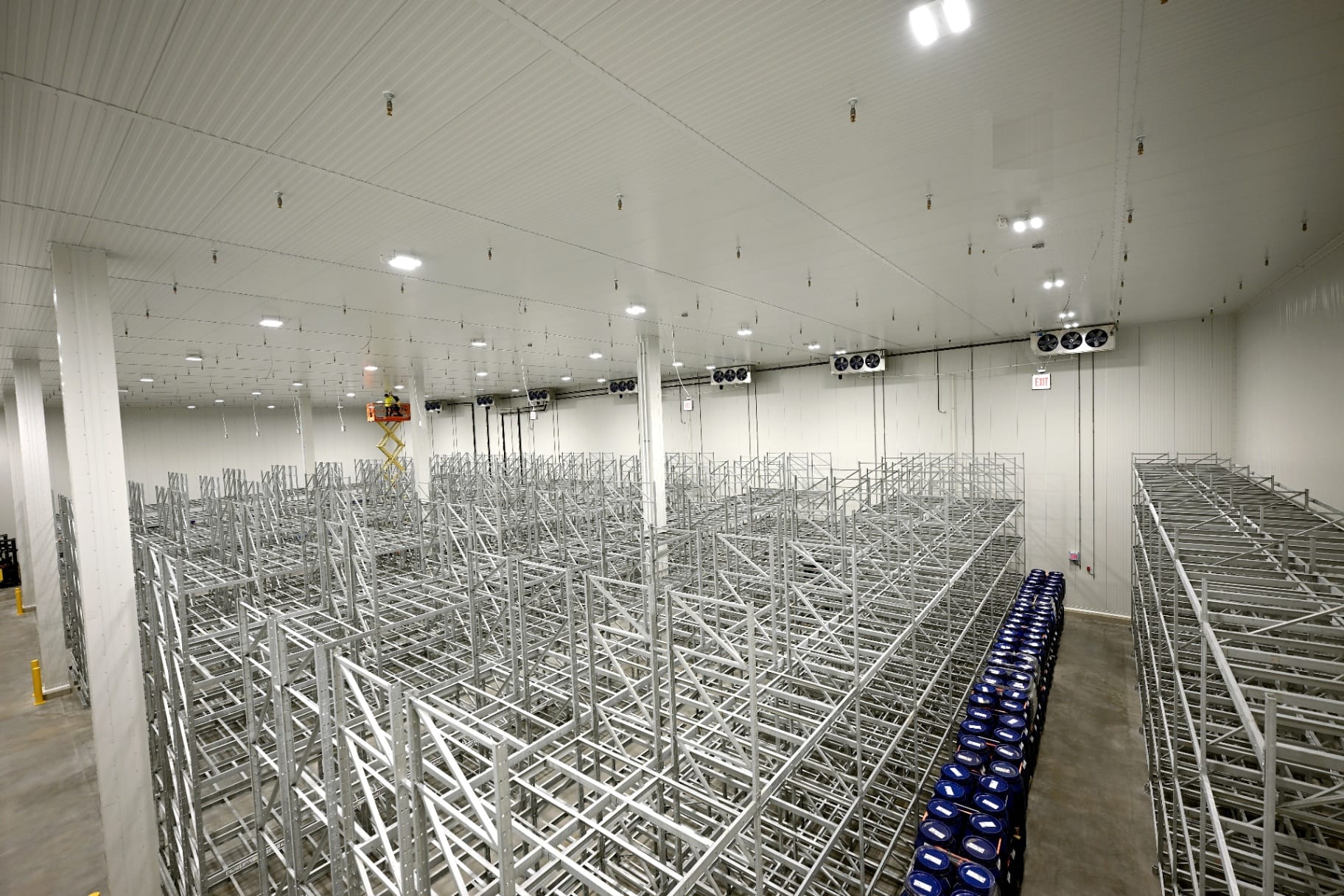
Insulated panel walls and ceiling in a cold storage racking room built by RSNE

IMP versus the cam-lock kit

Every Lock Is a Hole
in the Insulation.

A kit locks together with hardware set into the panel edges, one every couple of feet. At each one, hardware takes the place of foam. Heat leaks in through it, no matter what their brochures say.
A federal laboratory tested Cam-lock walk-in panels from five different manufacturers. The finished panel delivered 10 to 35 percent less than its foam, and cam-lock fixtures were one reason named.
The makers publish their own lock spacing — one every two to four feet down every seam.
The panels we install are tongue-and-groove, sealed continuous. No hardware through the foam, anywhere.
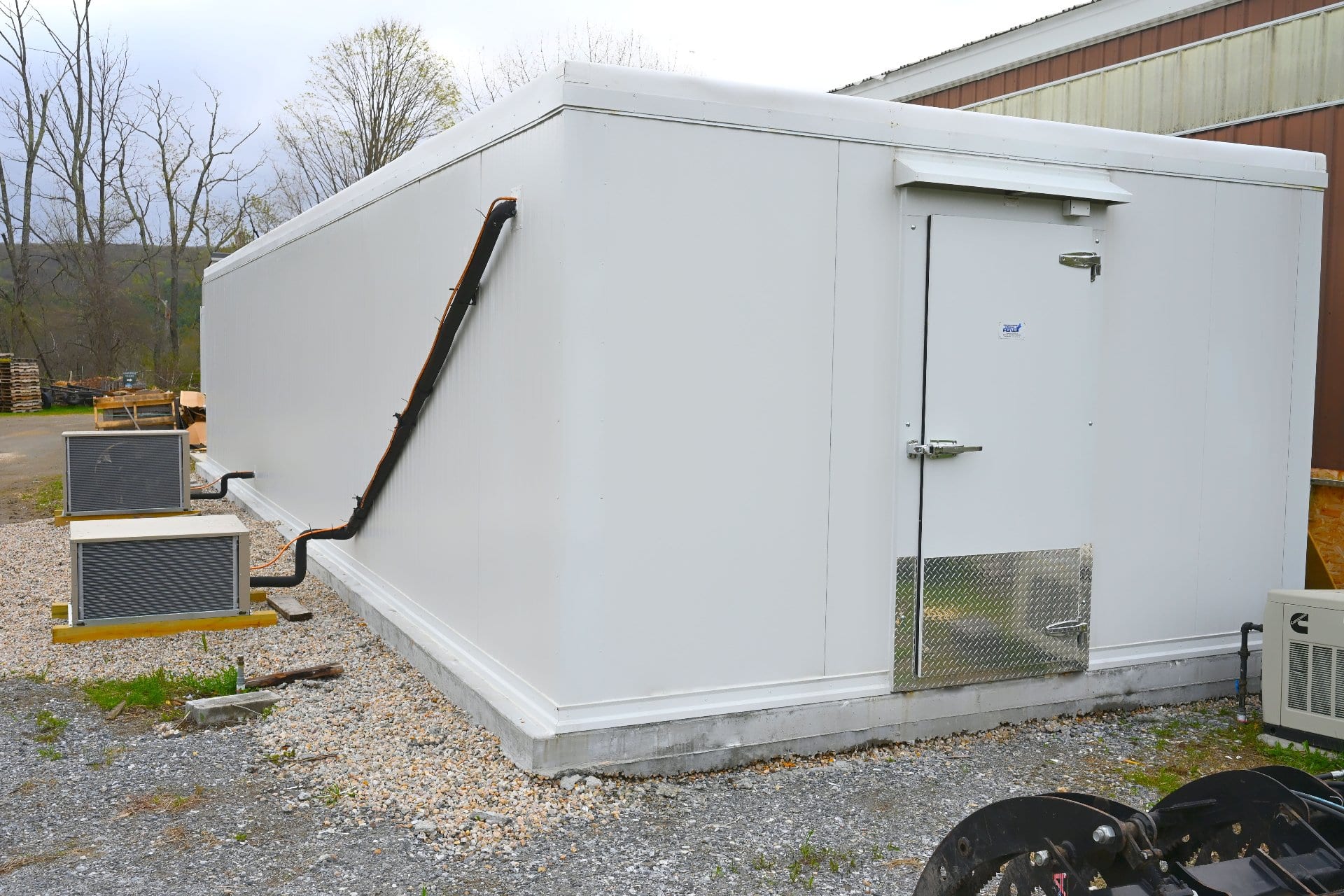
Outdoor walk-in cooler and freezer RSNE built for Berkshire Grown in Great Barrington, MA

IMP versus the cam-lock kit

Cam-lock Boxes Come in Standard Sizes.
Your Room Doesn’t.

Cam-lock boxes come in standard sizes: six and twelve inch increments. We measure your room and build a box that maximizes your cold storage space.
When a forklift goes through a wall, we cut the damage out and splice new panel in.
You cannot replace wall panels in a standing Cam-lock box. Many Cam-lock manufacturers void your warranty if the box is altered or moved after assembly.
Cam-lock manufacturers’ “quick-ship” claims only cover a short list of standard sizes. Delivery on non-standard sizes can take weeks, even months, and you still need a crew.
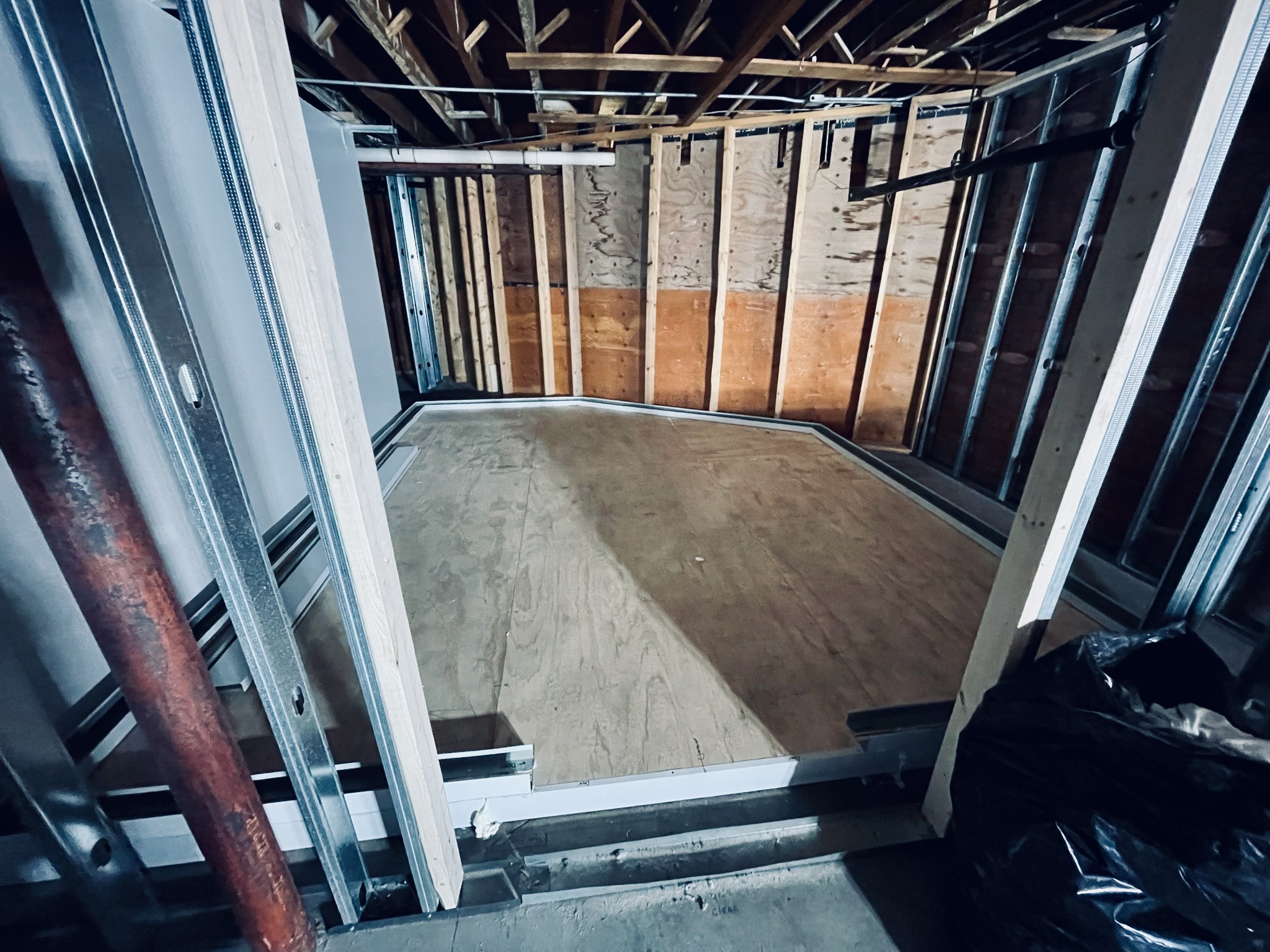
A framed basement room with an angled wall and pipes running through it, floored and ready for the walk-in cooler RSNE will build to fit itOddly shaped basement space with piping? No sweat.

IMP versus the low bid

The Cheap Box
Costs More.

A cheaper box is not cheaper. You pay the difference on your electric bill every month, for as long as it stands.

Through the walls and ceiling, a 4" cam-lock freezer lets in about 25% more heat than the 5" freezer we build.
An EPS box built thick enough to pass code takes the difference out of your floor space.
Done right, cold storage lasts thirty years. Done wrong, you’re rebuilding in five.

What goes wrong

Three Ways a Box Dies.
We See All Three.

01

Water in the core

A seam opens and warm air carries moisture into the wall. By then you are replacing panel, not sealing a seam.

02

The skin lets go

Heat, cold and washdown work a glue line for years. When it lets go, the wall bows.

03

Somebody hits it

A pallet jack finds the corner. On a kit, altering the box ends the warranty at many makers. We just splice in new panel.

Side by side

Same Box.
Three Different Walls.

What we are comparingThe panels we useEPS panelCam-lock kit
Wall, cooler / freezer4 in / 5 in or moreAbout 7 in / 8 in or more4 in / 4 in
Foam and steelPoured togetherGluedPoured together
The jointSealed, no hardwareTongue-and-grooveHardware through the edge
Built to suitYesYesFactory size grid
FM 4880 Class 1Yesthe PIR panelsNone foundSome — ask
Labor on the warranty1 year, oursPanel only, typicallyVaries — ask

Ask any bidder to fill this in for the box they are quoting.

IMP versus the low bid

Panel Makers Warrant Panels.
Not the Work.

Read the warranty before you sign the cheap bid. Most panel warranties in this trade pay for a panel and nothing else, not the crew that pulls the bad one out or the crew that sets the new one. The thirty-year warranties cover the foam’s rating, not the work.

1-year warranty on our labor and every RSNE-built door.
We stand behind every box we build.

Start Your Project

Tell us the room. We’ll tell you the wall.

01
Site visit & consult
We measure and listen, then quote.
02
Estimate
What we’ll do, in writing, within 2 business days.
03
Schedule
A date we set together, and keep.
04
Build
We build and install it in your building.
Start Your Project

1-year warranty on our labor and every RSNE-built door. Depending on the specs, we can start in as little as two weeks.

FAQ

Common Questions.

What do walk-in cooler panels cost?
We don’t publish pricing. Call and we’ll give you a budget number over the phone. The site visit is free, and it turns that number into a firm one.
What are walk in cooler panels made of?
Two steel skins with rigid foam in between. The panels we use are polyurethane (PUR) or polyisocyanurate (PIR), poured in so foam and steel set as one. Cheaper panels use glued expanded polystyrene (EPS) board.
Can you replace one panel, or does the whole box come apart?
One panel. We cut the damage out, splice in new panel matched to your thickness and finish, and seal it back to spec — see panel repair and replacement. Kit makers publish no way to do it.
How fast can you build?
Depending on the specs, we can start in as little as two weeks, and standard panel reaches our shop in about the same. A kit ships faster, then waits for a crew. Ours is the panel and the crew in one number.

Still have questions?

We know panels. It’s all we do. Give us a call and we’re here to help.

(508) 946-5555

Monday to Friday, 7 to 4.